


All Products
-
Pouches Packing Machine
-
Granule Packing Machine
-
Liquid Packing Machine
-
Powder Packing Machine
-
Mini Doypack Packaging Machine
-
Tea Bag Packing Machine
-
Coffee Packing Machine
-
Vertical Packing Machine
-
Flow Packing Machine
-
Stand Up Pouch Packaging Machine
-
Rotary Vacuum Packaging Machine
-
Filling Machine
-
Horizontal Doypack Packing Machine
-
Premade Bag
-
Packing Machine Accessories
-
Filling and capping machine
Electric Automated Palletizing Machine for Food & Paper Packaging Featuring Suction-based Stacking Built-in Collision Detection
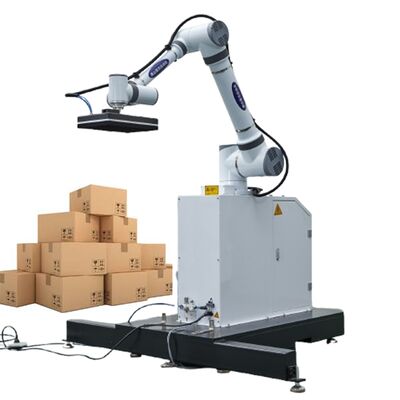


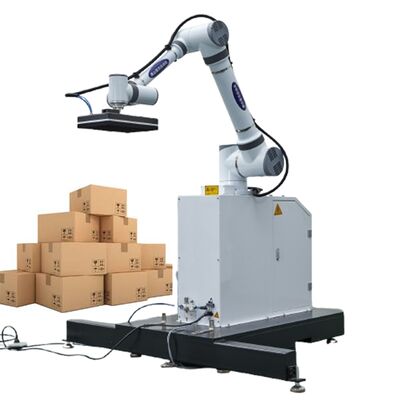
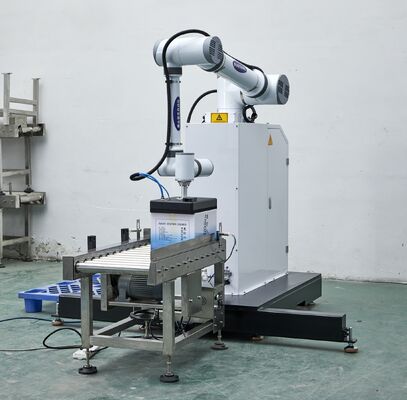
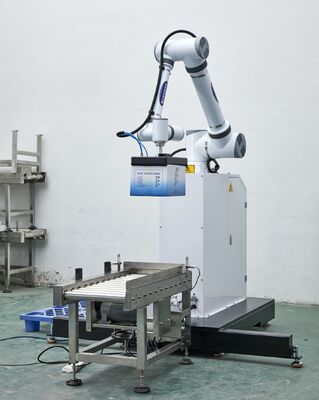
Product Details
| Product Name | Palletizer | Weight Of The Unit | 20kg |
|---|---|---|---|
| Operating Range | 1525mm | Maximum Wingspan | 1,730 Mm |
| Rated Voltage | Single-phase 220 V | ||
| Highlight | electric automated palletizing machine with collision detection,suction-based stacking palletizing machine,food packaging palletizing machine |
||
You can tick the products you need and communicate with us in the message board.
| Packing Machine Type | |
|---|---|
| Granule Packing Machine | |
| Liquid Packing Machine | |
| Powder Packing Machine | |
| Stand-Up Pouch Packing Machine | |
| Vertical Packing Machine | |
| Horizontal Packing Machine | |
| Tea Bag Machine | |
| Coffee Bean Packing Machine | |
| Horizontal Packing Machine |
Product Description
Electric Automated Palletizing Machine for Food & Paper Packaging Featuring Suction-based Stacking Built-in Collision Detection
A palletizer serves as a core component at the end of an automated production line. It is responsible for automatically stacking products—such as cartons and bags—onto pallets according to pre-set rules, thereby replacing manual handling and significantly enhancing the efficiency of warehousing and transportation operations.
I. Core Components and Workflow
Regardless of the specific type, the operation of any palletizer relies on the coordinated interplay of the following core systems:
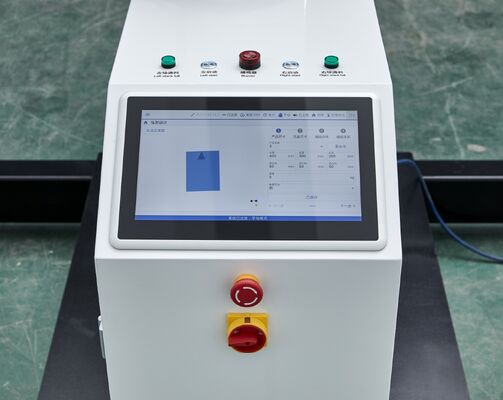
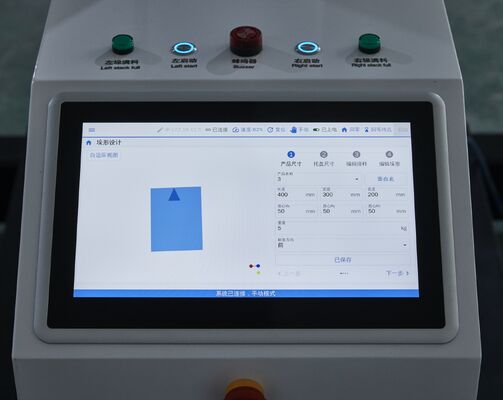
1. Control System: Acting as the "brain" of the equipment, this system utilizes a Programmable Logic Controller (PLC) and a human-machine interface (HMI) touchscreen to ensure intuitive operation while providing built-in fault diagnosis capabilities.
2. Execution System:This system performs the actual gripping and transfer movements through the use of multi-joint robotic arms or gantry-style sliding carriages.
3. Sensing System:Employing photoelectric and vision sensors to detect product positioning, this system also utilizes force sensors to precisely regulate gripping pressure, thereby preventing damage to the items being handled.
4. End Effector: Functioning as the "hand" attached to the end of the robotic arm, this component is selected based on the specific items being handled—options include vacuum suction cups (suitable for cartons), mechanical grippers (suitable for bags), or clamping mechanisms (suitable for drums/barrels).
II. Operational Value and Future Trends
1. Significant Efficiency Gains: Capable of operating continuously 24 hours a day, a single machine can replace the labor of 5 to 15 workers; high-speed models can achieve processing speeds exceeding five times that of manual labor.
2. Reduced Costs and Losses: In the long term, these systems effectively reduce labor costs. Furthermore, thanks to high-precision operation (achieving tolerances of ±0.3 mm to ±0.5 mm), they significantly lower product damage rates.
3. Future Trends: The market is currently trending toward greater collaboration (enabling safe human-robot coexistence), enhanced intelligence (incorporating AI vision systems), and increased localization (offering superior cost-effectiveness).
III. Selection Guidelines
1. Load and Speed:Determine the weight of the products (per carton or bag) and match this requirement with the equipment's operational efficiency.
2. Applicability: Verify the equipment's compatibility with various packaging formats, such as cartons, bags, drums, and other container types.
3.Environment and Space: For specialized environments (e.g., cold storage facilities or chemical plants), select models specifically designed for those conditions, and ensure that the equipment fits within the available installation space constraints.

Recommended Products